
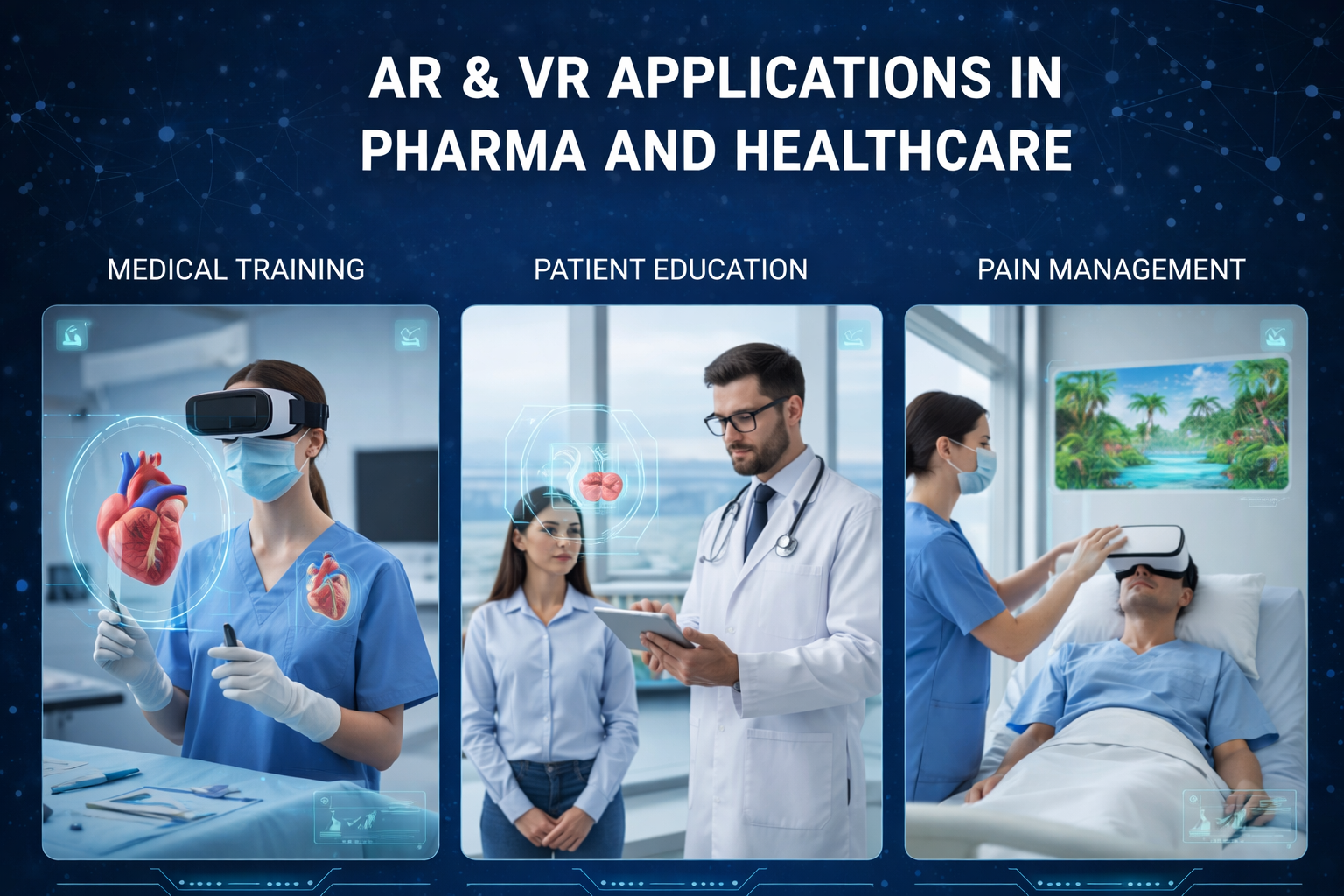
The pharmaceutical and healthcare industries are undergoing a digital transformation, driven by the need for better accuracy, improved patient outcomes, and clearer communication. Among the technologies shaping this change, Augmented Reality (AR) and Virtual Reality (VR) are emerging as powerful tools that go far beyond innovation for innovation’s sake. Today, they are being used to train medical professionals, educate patients, support clinical decision-making, and improve how healthcare services are delivered.
As healthcare systems grow more complex, AR and VR help simplify information by turning it into immersive, visual experiences that are easier to understand and apply in real-world settings.
Understanding AR and VR in a Healthcare Context
Augmented Reality enhances the real world by overlaying digital information onto physical environments. In healthcare, this could mean displaying medical data, visual guides, or 3D models directly within a doctor’s field of view. Virtual Reality, in contrast, places users inside a fully immersive digital environment, allowing them to practice, learn, or experience scenarios without physical risk.
Both technologies focus on one core goal: improving understanding through experience rather than explanation. This makes them especially valuable in medicine, where precision and clarity are critical.
Transforming Medical Training and Education
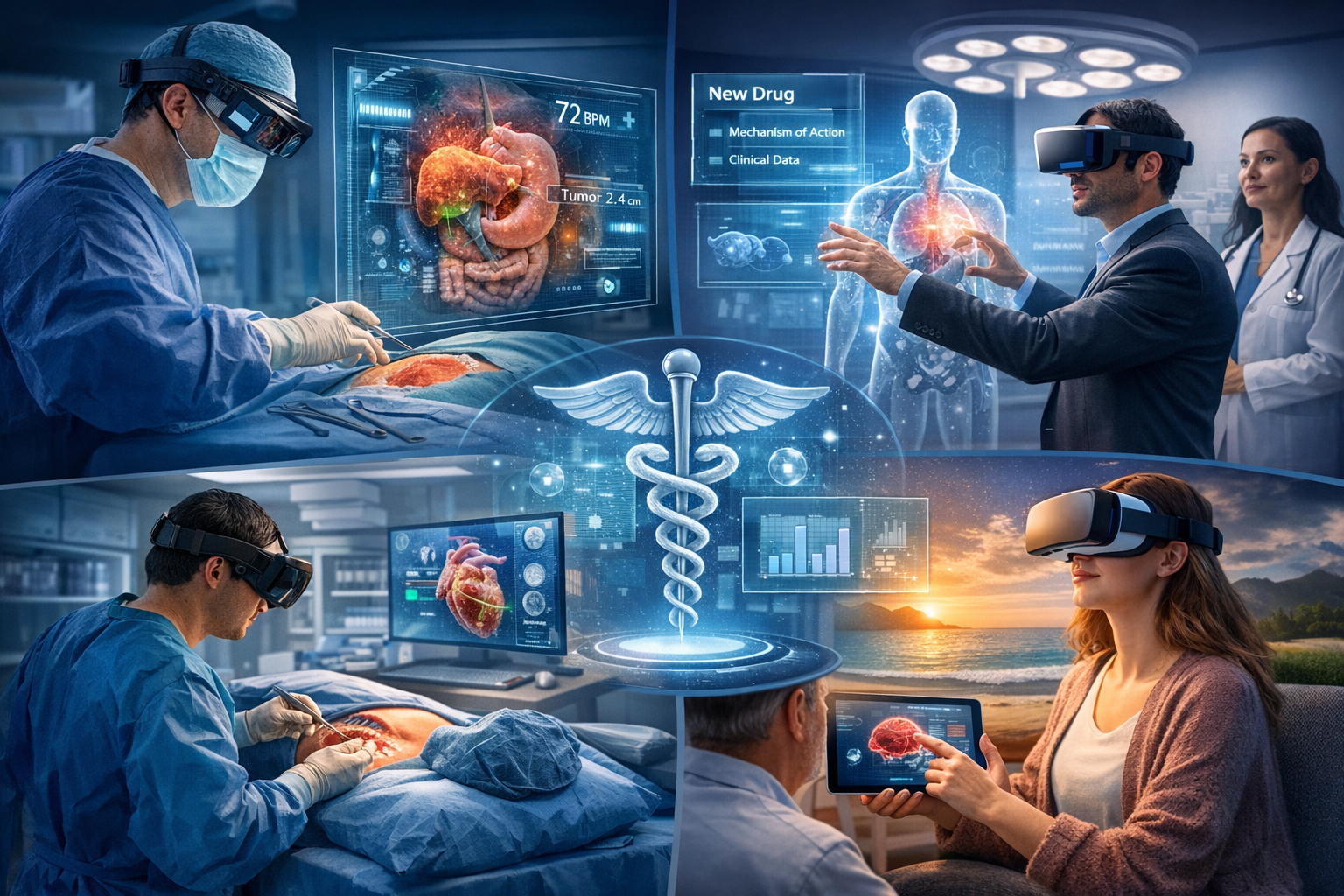
Training healthcare professionals has always required a balance between theory and hands-on experience. AR and VR are reshaping this process by providing realistic, repeatable, and safe training environments. Medical students can practice procedures in virtual operating rooms, explore human anatomy in 3D, and rehearse complex surgeries without putting patients at risk.
For experienced professionals, these technologies support ongoing learning by allowing them to refine techniques, stay updated on new procedures, and train for rare or high-risk scenarios. This results in better preparedness, reduced errors, and increased confidence in clinical settings.
Improving Patient Education and Communication
One of the biggest challenges in healthcare is helping patients understand their conditions and treatments. Medical terminology and complex explanations can often lead to confusion or anxiety. AR and VR help bridge this gap by visualising health information in a way that feels intuitive and reassuring.
Patients can see how a medication works in the body, understand surgical procedures before they happen, or follow guided rehabilitation exercises through immersive experiences. This improves trust, compliance, and overall patient satisfaction by making healthcare information more accessible.
Supporting Pharma Sales and Medical Marketing
In the pharmaceutical industry, AR and VR are changing how products are presented and understood. Instead of relying solely on brochures and presentations, pharma companies use immersive experiences to explain drug mechanisms, clinical benefits, and research data more effectively.
AR can bring product packaging and print materials to life, while VR enables interactive demonstrations for medical representatives, conferences, and training sessions. These tools help healthcare professionals grasp complex information faster, leading to more informed decision-making.
Enhancing Surgical Planning and Clinical Accuracy
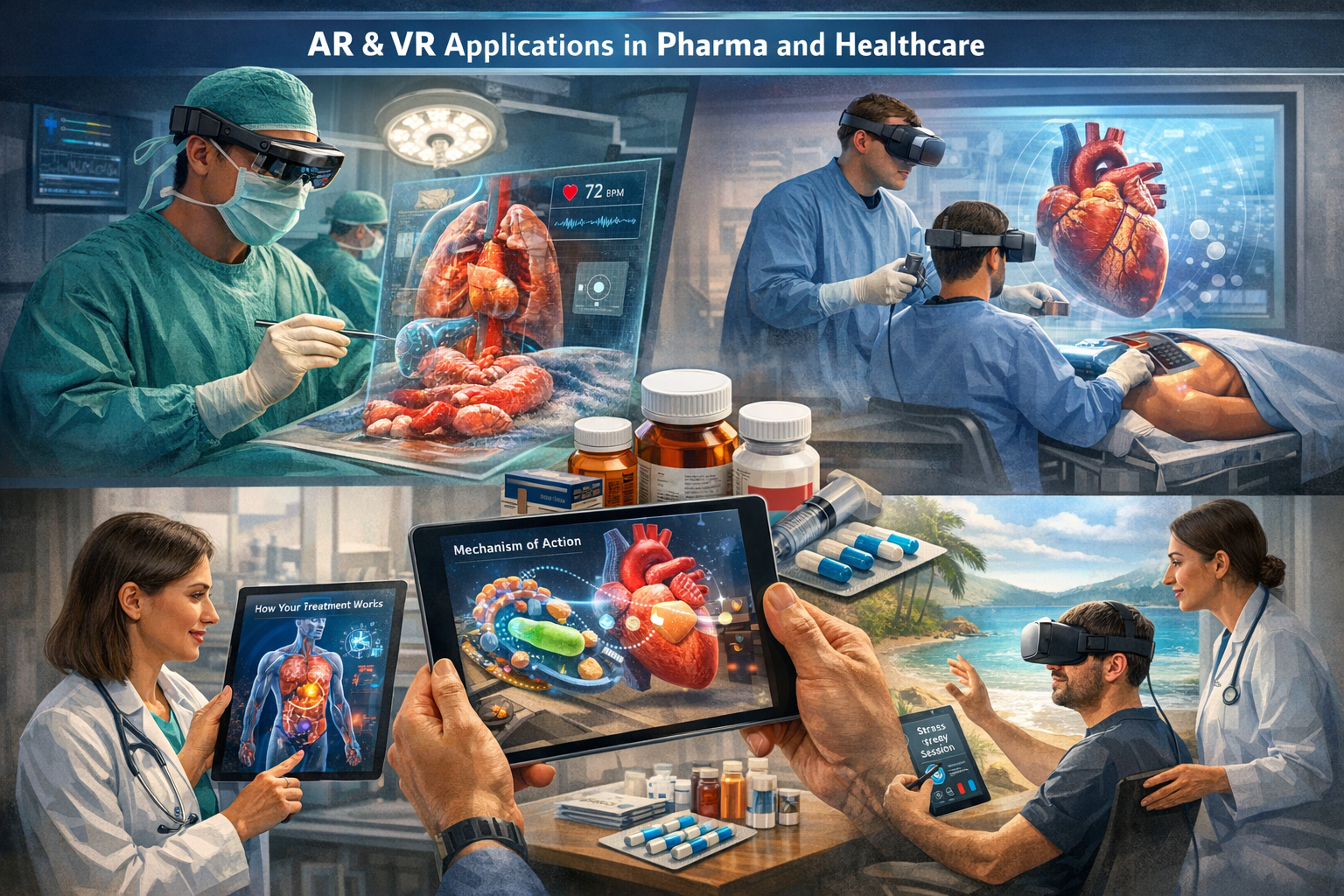
AR and VR are also being used to support surgical planning and precision. Surgeons can visualise patient-specific anatomy in 3D before entering the operating room, helping them plan procedures more accurately. During surgeries, AR can overlay critical data or guidance in real time, improving accuracy and reducing risks.
By combining digital insights with real-world expertise, these technologies contribute to safer procedures and better clinical outcomes.
Advancing Therapy, Rehabilitation, and Mental Health Care
Beyond clinical and pharmaceutical use, AR and VR are playing a growing role in therapy and rehabilitation. VR is widely used for pain management, physical therapy, and mental health treatments such as exposure therapy and stress reduction. Patients can engage in guided exercises or calming environments that support recovery in a controlled and comfortable way.
These immersive experiences not only improve effectiveness but also encourage patient participation, which is essential for long-term recovery and wellness.
Why AR and VR Adoption Is Growing in Healthcare
The increasing adoption of AR and VR in healthcare is driven by accessibility and proven value. Devices are becoming more affordable, software more user-friendly, and outcomes more measurable. Hospitals, pharmaceutical companies, and healthcare providers are recognising that immersive technologies help reduce training costs, improve communication, and enhance patient care.
More importantly, AR and VR support a shift toward patient-centric and data-driven healthcare, where understanding and engagement are just as important as treatment itself.
The Future of AR and VR in Pharma and Healthcare
As technology continues to advance, AR and VR will become even more integrated into everyday healthcare workflows. From remote consultations and virtual collaboration to advanced diagnostics and personalised treatment planning, immersive technologies will play a central role in the future of medicine.
Rather than replacing human expertise, AR and VR enhance it by providing better tools, clearer insights, and more effective ways to learn and communicate.
Final Thoughts
AR and VR are no longer experimental technologies in pharma and healthcare. They are practical, impactful solutions that improve training, enhance patient education, support clinical accuracy, and strengthen pharmaceutical communication. By transforming complex information into immersive experiences, these technologies help healthcare professionals and patients alike make better decisions.
At MagicalXR, the focus is on building AR and VR solutions that are grounded in real healthcare needs. By designing immersive experiences that prioritise clarity, usability, and measurable outcomes, MagicalXR helps pharmaceutical companies and healthcare providers adopt these technologies with confidence. As the healthcare industry continues to evolve, solutions developed by MagicalXR make it easier to deliver better care, improve understanding, and create meaningful impact through immersive technology.