
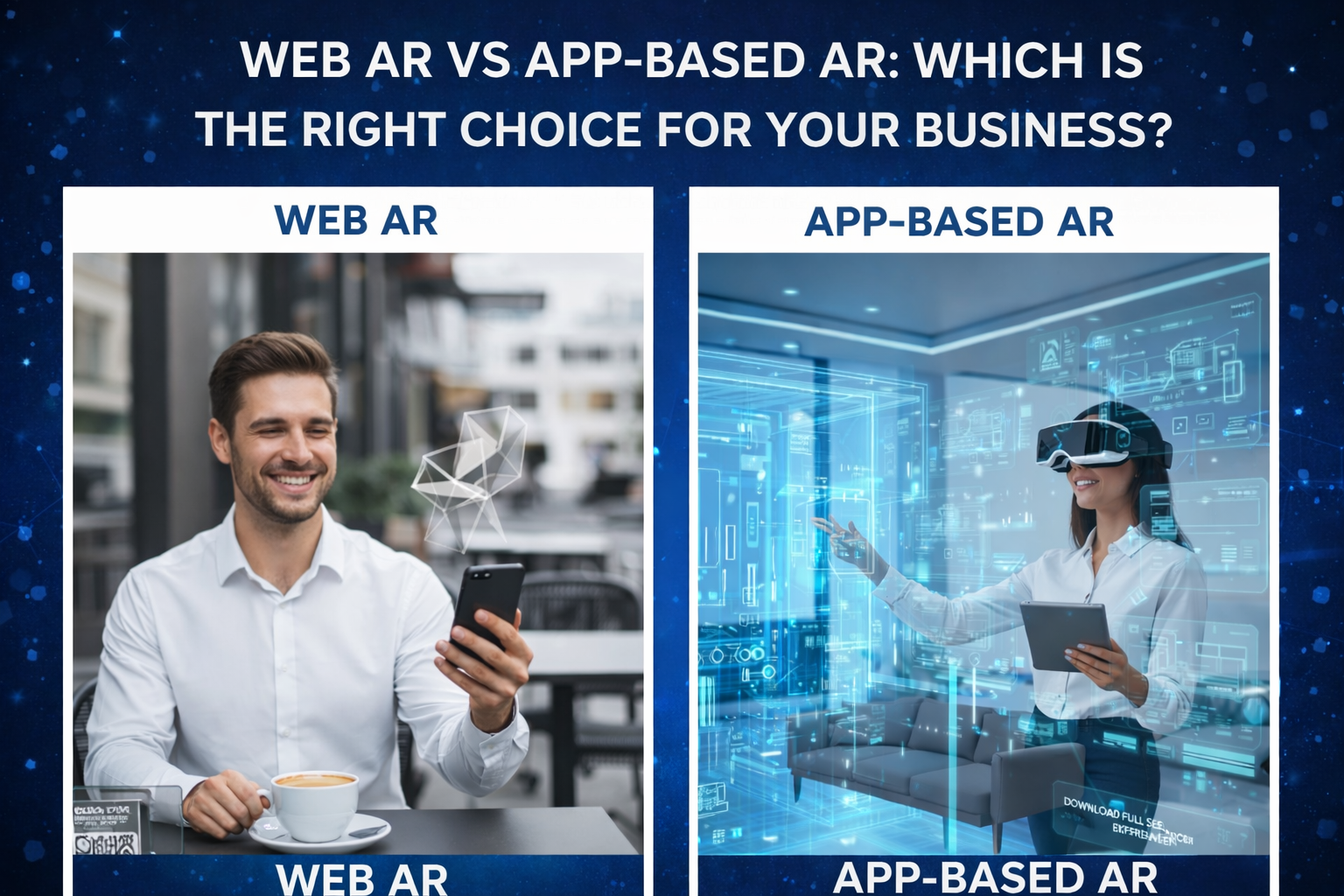
Augmented Reality is no longer a novelty reserved for tech giants or experimental campaigns. Today, AR is actively used by businesses across marketing, retail, real estate, education, and events to create more engaging and interactive customer experiences. As AR adoption grows, one important question keeps coming up: should a business choose Web-based AR or App-based AR?
Both options offer powerful ways to connect with audiences, but they serve different purposes. The right choice depends on what you want to achieve, who your audience is, and how you plan to use AR in your customer journey.
Understanding Web-Based AR
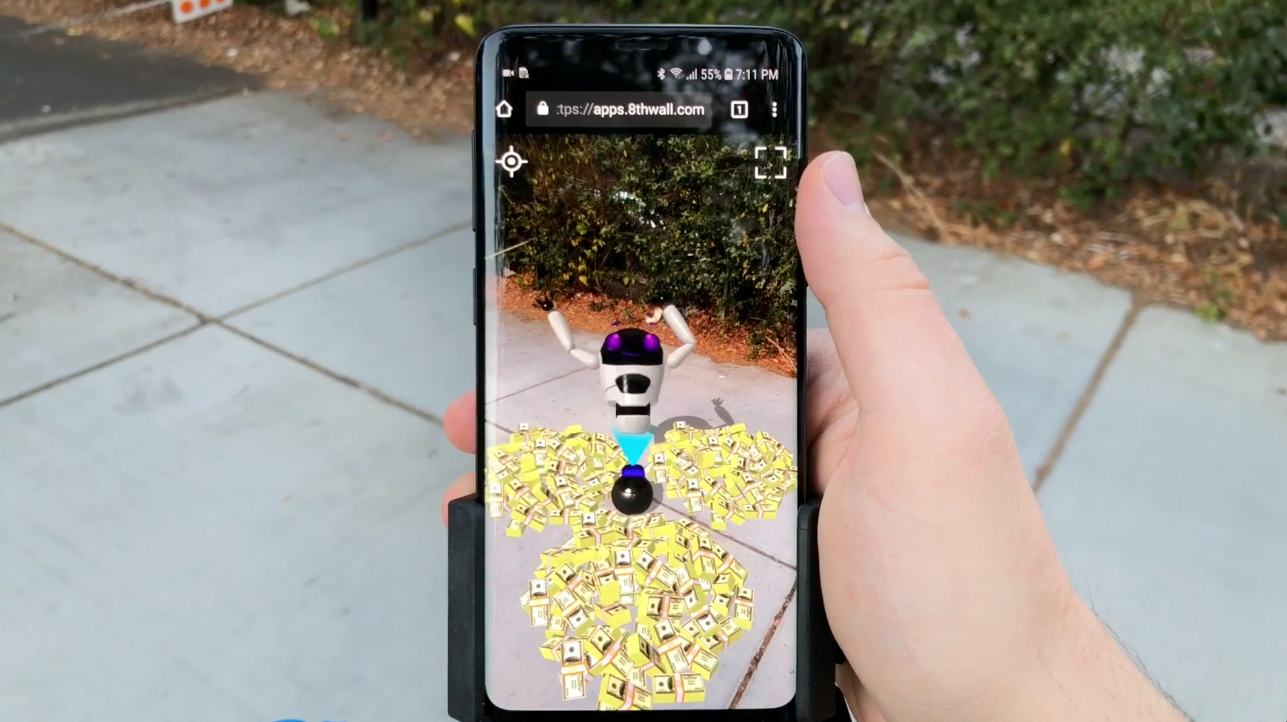
Web-based AR allows users to access augmented reality experiences directly through their mobile browsers. There’s no need to download an app. A simple QR code scan or link opens the experience instantly. This ease of access makes Web AR especially effective for campaigns where speed and convenience matter.
Scan → Browser → Instant Experience → One-time or short engagement
Because Web AR works on most modern smartphones, it has become a popular choice for marketing campaigns, product packaging, print media, event activations, and interactive storytelling. It removes friction from the experience, making it easier for users to engage without hesitation.
What App-Based AR Offers
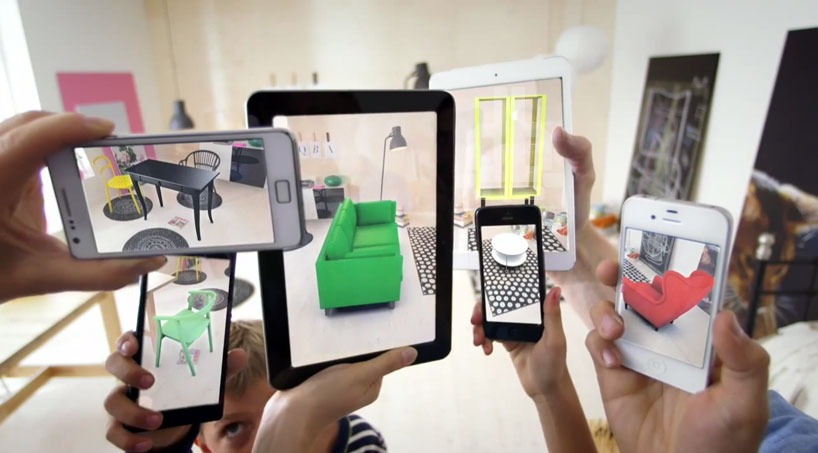
App-based AR, on the other hand, requires users to download a dedicated mobile application. While this extra step can slow down initial engagement, it unlocks more advanced capabilities. App-based AR is better suited for experiences that are deeper, more immersive, and designed for repeated use.
Download → App → Deep Experience → Repeat engagement
Businesses often choose app-based AR when they need complex 3D environments, long-term engagement, or features that rely heavily on device hardware and ongoing user interaction. This approach works well for platforms where AR is a core part of the product rather than a single touchpoint.
Accessibility and User Experience
One of the biggest differences between Web AR and App-based AR lies in how easily users can access the experience. Web AR offers instant entry, which naturally leads to higher participation rates, especially for first-time users. There’s no commitment required beyond curiosity.
App-based AR introduces a barrier in the form of downloads and updates. While this may reduce initial adoption, users who do install the app are often more engaged and invested in the brand. This makes app-based AR suitable for audiences who expect ongoing value rather than one-time interactions.
Choosing the Right Use Case
Web AR shines in situations where reach and speed are priorities. It works well for short-term campaigns, product demonstrations, interactive packaging, and events where users may engage only once or twice. Because updates can be made instantly on the backend, Web AR is also easier to maintain for fast-moving campaigns.
App-based AR is a better fit when experiences need to evolve over time. Industries like real estate, architecture, training, and simulations often rely on app-based AR to deliver detailed walkthroughs, advanced visualisation, and repeat engagement. In these cases, the app itself becomes part of the user’s toolkit.
Cost, Maintenance, and Scalability
From a cost perspective, Web AR is generally more affordable to launch and maintain. It doesn’t require app store approvals or constant update prompts, making it ideal for businesses testing AR or running multiple campaigns throughout the year.
App-based AR typically involves higher development and maintenance costs, but it offers greater control and scalability for long-term solutions. For businesses planning to build a dedicated AR platform or tool, the investment can be worthwhile.
Making the Right Decision for Your Business
The choice between Web AR and App-based AR should always come back to your business goals. If your focus is on maximum reach, fast engagement, and low friction, Web AR is often the smarter option. If your goal is deep immersion, repeat usage, and complex interactions, app-based AR may be the better fit.
In many cases, businesses don’t have to choose just one. Some use Web AR for marketing and awareness, while relying on app-based AR for more advanced or long-term experiences. The key is aligning the technology with the purpose it serves.
How MagicalXR Helps Businesses Choose Wisely
At MagicalXR, the approach is never one-size-fits-all. Every business has different goals, audiences, and challenges. That’s why the focus is always on understanding the use case first, then recommending the most effective AR solution.
Whether it’s Web-based AR for interactive packaging and marketing campaigns, or app-based AR and VR for immersive walkthroughs and environments, the goal is always to deliver experiences that create real business impact, not just visual novelty.
Final Thoughts
Web AR and App-based AR each have their own strengths, and neither is universally better than the other. The real advantage comes from choosing the option that best supports your customer journey and business objectives.
When AR is implemented with clarity and purpose, it becomes a powerful tool for engagement, education, and conversion. For businesses exploring augmented reality, working with the right partner can make all the difference. MagicalXR helps brands navigate these choices and build AR experiences that are effective, scalable, and aligned with long-term growth.